There are new problems in society, such as reactive attachment disorder http://en.wikipedia.org/wiki/Reactive_attachment_disorder, that all stem from abusive childhoods and such childhoods are producing adults who perpetuate the damage that was applied to them. The thesis here is what do we do with said individuals after we have identified them? Do we allow them to breed? To continue to exist?
In theory we are all born as blank slates and our mores and actions are learned from our caregivers. This is not to deny inherited traits whatsoever. Part of who we are is genetic. Much of who we become though is learned. And in the latter is where the issues arise. To borrow from Draper, what we become is directly related to the humans we deal with, not non-human entities. There is no interference from some "Creator" being.
A child born of parents who have one or both as alcoholics will most likely become one themself. That is the simple genetics of the situation. Only a genetic miscue would prevent it. The point of this is that there are matters where pure genetics influence the outcome. And this will dissuade an argument for a "Creator" being.
Back to my thesis, children are not born evil. That is a moral imposition. A parent, or both, then directly influence the progression their child has along the moral "norm" scale. While many try to ingrain positive moral basis in their child, a rare few do not, and in fact do the opposite.
A person that abuses a child, either physically or mentally, destroys the delicate threshold one has over learning what is right and wrong, well before one must make those decisions. That person did learn from another to be the way they are. That is the nurture argument in a bullet-proof shell. But at the same time they also know that they were created to be the way they are. And then they choose to create others as such.
What I propose is the removal of such individuals from society. Yes, a form of genocide if one will. Because these individuals actively perpetuate cruel acts and train others to do the same, they are not worthy of remaining in society (insert Rorty argument here). A society without those that have learned to abuse should be free of it. And one can only imagine what such a society was able to accomplish, now free of the threat of physical/emotional pain...
Showing posts with label free will. Show all posts
Showing posts with label free will. Show all posts
08 January 2013
02 December 2012
Does sex just feel good or is it objectification of others?
Without a doubt, sex is a physical act, one acted upon every second of each day by a myriad of creatures. Being human, we feel this "necessity" to pare it down to some sort of Davidsonian act, an act that needs the subconscious motivations explained. But do we?
In its simplest form, two (or more) beings engage in coitus. The base desire is procreation. It is something that is encoded in all known dna from elephants to amoebas. We couple with another, and not necessarily with a differing sex, because our genetics tell us we need to do so. Even Spock had to (Star Trek bonus points).
Being advanced creatures with few peers, or so we think, should we be above base instincts? Should we deny the animal within? And if we do not, why do we not?
Kant had the idea that sex was a degradation of human nature, a "necessary evil" almost. We participated because it was our nature to do so. To follow that line, one that could avoid having sex would be a more enlightened being. Hence chastity amongst religious sectors. In a nutshell, we have sex because we can't avoid it.
Davidson would argue (and Haack as well) that our need for sexual coupling may have nothing to do at all with fulfilling sexual need, but emotional ones or even naricissistic ones. We have sex because it appeases something other than a base instinct, from boredom to dominance of another.
Person 'A' finds person 'B' attractive. A's hormones begin to work against him/her and compel one to approach B for the sole intent of coupling. B accepts because of the same hormone reaction. What follows afterwards is not part of the sexual experience. It is the act itself that matters, the one that is in question.
In its simplest form, sexual congress is the conjoining of at least 2 individuals/creatures for the sole purpose of attempting to procreate. Whether that happens or not is moot. It is the act itself that matters. And it is in that act that Davidsonian/Pessimistic arguments fall to the wayside. Procreation overrules all other base desires.
As example, one finds another attractive. A to B. A has a subconscious reaction that causes A to desire to procreate, subconscious or not. What follows has nothing to do with the act itself. A may rape B or go home an masturbate or even have sex with C while thinking of B. In the end, the desire to attempt to procreate is satisfied.
In the end, as long as the desire to procreate is satisfied objectification of others and such is an extension of that desire and one that can be parsed from it. It is a perversion or sexual diet that while dependent upon procreation, uses it only as its initial source motivation. We have initially have sex because we want to create children. What follows once the clothes are removed can be entirely different.
In its simplest form, two (or more) beings engage in coitus. The base desire is procreation. It is something that is encoded in all known dna from elephants to amoebas. We couple with another, and not necessarily with a differing sex, because our genetics tell us we need to do so. Even Spock had to (Star Trek bonus points).
Being advanced creatures with few peers, or so we think, should we be above base instincts? Should we deny the animal within? And if we do not, why do we not?
Kant had the idea that sex was a degradation of human nature, a "necessary evil" almost. We participated because it was our nature to do so. To follow that line, one that could avoid having sex would be a more enlightened being. Hence chastity amongst religious sectors. In a nutshell, we have sex because we can't avoid it.
Davidson would argue (and Haack as well) that our need for sexual coupling may have nothing to do at all with fulfilling sexual need, but emotional ones or even naricissistic ones. We have sex because it appeases something other than a base instinct, from boredom to dominance of another.
Person 'A' finds person 'B' attractive. A's hormones begin to work against him/her and compel one to approach B for the sole intent of coupling. B accepts because of the same hormone reaction. What follows afterwards is not part of the sexual experience. It is the act itself that matters, the one that is in question.
In its simplest form, sexual congress is the conjoining of at least 2 individuals/creatures for the sole purpose of attempting to procreate. Whether that happens or not is moot. It is the act itself that matters. And it is in that act that Davidsonian/Pessimistic arguments fall to the wayside. Procreation overrules all other base desires.
As example, one finds another attractive. A to B. A has a subconscious reaction that causes A to desire to procreate, subconscious or not. What follows has nothing to do with the act itself. A may rape B or go home an masturbate or even have sex with C while thinking of B. In the end, the desire to attempt to procreate is satisfied.
In the end, as long as the desire to procreate is satisfied objectification of others and such is an extension of that desire and one that can be parsed from it. It is a perversion or sexual diet that while dependent upon procreation, uses it only as its initial source motivation. We have initially have sex because we want to create children. What follows once the clothes are removed can be entirely different.

19 September 2012
Dictum on Human Consciousness
[NOTE: This is a post of mine from sometime around 2006 on a philosophy forum. Figured it should come home here.]
I
tend to have little faith in civilization building, because the only
definition we have is a human one. Therefore I discount and do not
acknowledge its role in defining superior consciousness. To go the
anthropomorphic route, one could easily argue that ants build
civilizations. They create buildings, which are quite complex, have a
hierarchy with an executive and judicial branch, and have clearly
defined jobs.
To
use an entirely humanistic perspective, how much have we really
evolved in the last 3000 years? 300? The Sear’s tower is little
different than the pyramids at Giza, aside from the material
differences. The Mayans had a technological level that to this day we
can not understand. They were a group of people who had no metal
weapons and were limited to obsidian ones, yet created buildings with
such precision that the stones are still perfectly fitted together.
With the industrial use of lasers, we have only just begun to
replicate this feat. The ancient Sumerians were claimed to have
sailed around the world, in the years of 2100 bce, 3500 years prior
to Columbus. In our pompousness we attributed the tale to myth. In
the 1980s, a replication of a Sumerian-style boat was built and was
sailed from the Mediterranean to the East coast of South America,
proving that the Sumerian tale could be correct.
If
anything, we have regressed. Our knowledge of the stars is just now
beginning to rival the Mayans, the Dogan tribe has worshipped a star
for over 5000 years, and in the 80's we finally found that star.
DaVinci's sketches in the late 1400s-early 1500s, of the workings of
a human heart have just been validated within the last 5 years. We
have launched satellites into orbit, yet the Chinese were capable of
this close to 3000 years ago, and Newton proved the possibility of
this in the 1600’s. DaVinci in the 1500s created drafts of such an
object. On the DaVinci front, he drew a flying machine that had been
discounted as impossible to take air, even though there are folk
tales of a gigantic bird flying through the air during the time of
his experiments. In the beginning of this century/millennia, his
drawings were built and his flying machine was proved to be
theoretically correct and possibly viable. He may have been the first
human to fly, beating the Wright brothers by over 400 years.
I
do not think at all that language is a measure of consciousness, for
the simple reason that as humans we have a clear identification of
language. We have no proof that "lower" life forms do not
effectively communicate with the ability that we do. We simply have
no understanding of their system. Ants and bees are able to
communicate a great deal of information through scents, and dolphins
and whales achieve the same thing through sonic and subsonic waves.
It is our arrogance as humans that brings us down. Yes, language is a
capacity shared by high intelligence creatures, but again, language
can never be based on our human beliefs.
We
have spent centuries espousing apes and monkeys as being our
progenitors, based on genetic similarities, and because of this we
have ignored other creatures along the way. Darwin (1800s) studied
worms and found that they were capable of adaptation and
discriminatory abilities which are usually reserved for more highly
intelligent and supposedly more conscious creatures. In the last
decade we have found that crows are capable of fashioning tools.
Birds, in general, are capable of amazing feats (to humans) of
geo-location. The lowly octopods, with brains that are very
dissimilar to ours, are capable of complex problem-solving that human
infants could never hope to achieve.
Consciousness
has been argued as being either physical or non-physical, yet few
have argued the possibility of both. With the invention of MRI and
FLAIR and PET, as a species we have come closer to knowing where
consciousness lies. Neuroscience has recently supported the view that
glia are not “stuffing” in the brain, but complex
neurotransmitters. Recently, scientists have learned that what was
believed to be a hormone, estrogen, is actually a neurotransmitter.
It is my belief that we are no closer to understanding the nature of
human consciousness than Descartes.
Can
computers attain consciousness? Yes, I believe so. But I do not think
that it is possible in the least for computers to mimic a human's
thought patterns. The “Chinese Room” could easily be solved by a
computer running the index
of coincidence (http://en.wikipedia.org/wiki/Index_of_coincidence)
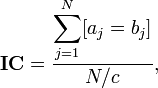
Would
solving the “Chinese Room” measure anything viable or valid?
Doubtful. A contention of mine is that no test developed by humans
could ever successfully determine consciousness by the simple fact
that we define it by our own beliefs.
Super
String theory has stated that 13 dimensions are believed to be
possible. Again our failing is humanity. Who are we to say that one
of those dimensions is not one where computers are conscious?
Philosophers like Dennet and Searle, and yes they are nothing more
than philosophers (not a bad thing though) are human, and hence
fallible. We can not be presumptuous enough to believe that our
theories, based on human experience, can define a universal thing
like consciousness. The best we can hope for is to define our
particular brand.
22 August 2012
Fate
In a recent conversation I told a friend that Fate was the same thing as Luck.The Lorenz attractor justifies this belief.
Luck is something that can be defined as something beneficial that happens to us that is not in our direct control. Sort of like walking down the street and finding a $20 bill. The bill was lying there randomly and we were randomly walking there and found it. But it was all math.
Fate is something that pushes us towards a "thing". We choose to ride a bus and when we get off we walk into a person. That person is attractive to us and we exchange numbers. A year later we marry that person. That is Fate. And that is still math.
The above is the math for the Lorenz attractor aka the Butterfly Effect. Basically, whatever we send out influences things and those things influence what we have to work with. This is what people who cite "yin yang" mistakenly identify with.
Fate and Luck are nothing more than the forces of Nature being influenced in such a way that it affects outcomes in our own lives. They are not mystical things at all, but results from computations. We do something that reverberates and that reverberation rebounds upon itself.
To return to the examples, the $20 bill could have been lost by anyone and found by anyone. A cop driving down the road could have found it. It was not our luck. Most likely we were following that path to get to a destination and just happened upon it.
To run into a person and then marry them? This is less Fate than something random. Any person we run into could be a person that we end up with, but for the most part, the people we run into are just random ones. Some can contribute to our lives and others are just background noise.
Is this an example of the Matrix? Maybe. We can never know if that's the actual truth...unless mathematics says so. But until disproved, Fate and Luck do not exist.
Luck is something that can be defined as something beneficial that happens to us that is not in our direct control. Sort of like walking down the street and finding a $20 bill. The bill was lying there randomly and we were randomly walking there and found it. But it was all math.
Fate is something that pushes us towards a "thing". We choose to ride a bus and when we get off we walk into a person. That person is attractive to us and we exchange numbers. A year later we marry that person. That is Fate. And that is still math.
 |  |  |
(1)
|
 |  |  |
Fate and Luck are nothing more than the forces of Nature being influenced in such a way that it affects outcomes in our own lives. They are not mystical things at all, but results from computations. We do something that reverberates and that reverberation rebounds upon itself.
To return to the examples, the $20 bill could have been lost by anyone and found by anyone. A cop driving down the road could have found it. It was not our luck. Most likely we were following that path to get to a destination and just happened upon it.
To run into a person and then marry them? This is less Fate than something random. Any person we run into could be a person that we end up with, but for the most part, the people we run into are just random ones. Some can contribute to our lives and others are just background noise.
Is this an example of the Matrix? Maybe. We can never know if that's the actual truth...unless mathematics says so. But until disproved, Fate and Luck do not exist.
06 October 2010
What is bad?
A local television ministry has the following statement in their commercial:
Putting aside the question of whether such deities exist, instead we need to focus on the ambiguity of the words good and bad. Neither word has an absolute meaning. Each person, pending we have free will, makes constant determinations as to what they believe is good and bad. Sartre was fond of making the argument that without god man creates himself. I make a much looser assertion.
A perfect example is food. Say you think prime rib is good. To a vegan, prime rib is bad. It is both good and bad, ambiguous.
To a catholic, god is good and the devil is bad. To a satanist the devil is good and god is bad.
What about murder? Murder is the willful taking of life. Can murder be a good thing or is it always bad? A poor analogy would be the war argument, that soldiers willingly murder people, but they don't. They follow orders. Taking ones own life is murder and therefore bad. But its not. In certain cultures committing suicide is respected and therefore good.
And if god exists, then god takes our lives willfully, being the supreme arbitrator of life and death. So to rewrite the statement of the television ministry:
if its good its god, if its bad its the devil.
Putting aside the question of whether such deities exist, instead we need to focus on the ambiguity of the words good and bad. Neither word has an absolute meaning. Each person, pending we have free will, makes constant determinations as to what they believe is good and bad. Sartre was fond of making the argument that without god man creates himself. I make a much looser assertion.
A perfect example is food. Say you think prime rib is good. To a vegan, prime rib is bad. It is both good and bad, ambiguous.
To a catholic, god is good and the devil is bad. To a satanist the devil is good and god is bad.
What about murder? Murder is the willful taking of life. Can murder be a good thing or is it always bad? A poor analogy would be the war argument, that soldiers willingly murder people, but they don't. They follow orders. Taking ones own life is murder and therefore bad. But its not. In certain cultures committing suicide is respected and therefore good.
And if god exists, then god takes our lives willfully, being the supreme arbitrator of life and death. So to rewrite the statement of the television ministry:
If its good it might be god or the devil, and if its bad it might be god or the devil
20 December 2009
Sartreian Freedom
As an atheist, Sartre denied that man is born with certain values, that man is born with universal ethics. As such, man must define freedom through his own actions. Freedom, in a classical definition, is to be without restraint. Sartre attempted to expand that definition by asserting that man was a prisoner of his own freedom, and that freedom was the only source of values. In short, man decides his values as he discovers his freedom.
As such, it matters not what side of a battle man sides with, so long as man acts with “good faith”, chooses the good of an action. Man, being his own source of freedom, establishes his own values. To deny introspection, to not choose to act for the good, leaves man in anxiety and acting in “bad faith”. Man must not act as others act, in a universal good, because that would remove introspection, would render the decision bad. Being born without a hierarchal system of values, man continually builds his own. As such, man is able to destroy the hierarchy with each choice and establish a new one. Man, realizing that he is the source of values, the fount of freedom, will only choose to adhere to his freedom. Man then, with a god removed, is his own judge.
Sartre was emphasizing that freedom is subjective, in that, man and man alone is capable of understanding his own freedom. Sartre believed that most men hide from their freedom, in denial of it, and adopt the deterministic values of society and/or theology. Attribution to external sources is utter denial of inherent freedom. Things influence things, but man, as an actor, is not a thing. Man is responsible for himself. To act differently makes man inauthentic, and man renounces his humanity.
To further extend freedom, no man has rights, as rights are external things. Rights are determinism. A ruler has the right to rule because the citizens deny their freedom in a Nietzscheian slave-morality as they accept passively the values set before them. Rights
have no ability to guide one’s action, to determine conduct. Man, being aware of his freedom, creates his own values, his own hierarchies. As such, even a revolutionary, one who battles for the freedom of all, denies his own freedom, as a revolution carries its own values and rules of conduct, ethics.
Sartre has established that man being free determines his own values, and as such, those values are mercurial, changing with each situation. A man who must choose between family and country can not rely on established values, but must determine his own action. Man must act for the good. How each man determines the good is man’s freedom. Freedom then is an active form, is not in stasis. Man who resists freedom is in a continual form of anxiety, as he must determine
to act for the good, to create his own values with each situation.
As such, it matters not what side of a battle man sides with, so long as man acts with “good faith”, chooses the good of an action. Man, being his own source of freedom, establishes his own values. To deny introspection, to not choose to act for the good, leaves man in anxiety and acting in “bad faith”. Man must not act as others act, in a universal good, because that would remove introspection, would render the decision bad. Being born without a hierarchal system of values, man continually builds his own. As such, man is able to destroy the hierarchy with each choice and establish a new one. Man, realizing that he is the source of values, the fount of freedom, will only choose to adhere to his freedom. Man then, with a god removed, is his own judge.
Sartre was emphasizing that freedom is subjective, in that, man and man alone is capable of understanding his own freedom. Sartre believed that most men hide from their freedom, in denial of it, and adopt the deterministic values of society and/or theology. Attribution to external sources is utter denial of inherent freedom. Things influence things, but man, as an actor, is not a thing. Man is responsible for himself. To act differently makes man inauthentic, and man renounces his humanity.
To further extend freedom, no man has rights, as rights are external things. Rights are determinism. A ruler has the right to rule because the citizens deny their freedom in a Nietzscheian slave-morality as they accept passively the values set before them. Rights
have no ability to guide one’s action, to determine conduct. Man, being aware of his freedom, creates his own values, his own hierarchies. As such, even a revolutionary, one who battles for the freedom of all, denies his own freedom, as a revolution carries its own values and rules of conduct, ethics.
Sartre has established that man being free determines his own values, and as such, those values are mercurial, changing with each situation. A man who must choose between family and country can not rely on established values, but must determine his own action. Man must act for the good. How each man determines the good is man’s freedom. Freedom then is an active form, is not in stasis. Man who resists freedom is in a continual form of anxiety, as he must determine
to act for the good, to create his own values with each situation.
25 July 2009
Free will and consciousness: are they conjoined twins?
There are those that believe that you can not have free will without being conscious. Most will accept that you can be conscious but have no free will. I won't get into the Ontological portion of the argument in this post (but will eventually I am sure). I maintain that one could be either conscious or have a free will but it is not necessary to have both. To clarify, I can be conscious but have no free will, and I can have free will and have no consciousness.
The first part is easy to support. But how can one have free will and not be conscious? If monkeys do not have consciousness (many believe that humans are the only conscious things), and you put a banana to the left and right of them and they select a banana, then they have free will without consciousness. Could this apply to humans? Certainly. We make choices all the time (free will) but have no real viable means of detecting if we are actually conscious.
The first part is easy to support. But how can one have free will and not be conscious? If monkeys do not have consciousness (many believe that humans are the only conscious things), and you put a banana to the left and right of them and they select a banana, then they have free will without consciousness. Could this apply to humans? Certainly. We make choices all the time (free will) but have no real viable means of detecting if we are actually conscious.
03 July 2009
Intelligent Design = No free will
ID (intelligent design/creationism) has purported that the entire universe was created by an intelligent 'designer' and actually do use some factual scientific evidence to support it. And of course, their scientific evidence is dwarfed by the Darwinic evidence. But I digress. The hole I want to poke into their entire argument centers on free will.
For about as long as philosophy has existed, free will has been a hot debate. From my readings of ID, readings that say that everything was created following a specific design, there is only one possibility regarding free will: there is none.
You see, if someone created us, and we were created to serve a purpose, that purpose is our drive. To have such a drive is akin to a computer program. The program could be a jumble of useless code, but if it were, it would not serve its purpose. But if the code was specific, the program would do what the author intended. As such, if we were all created to fulfill a purpose, then we have no free will.
To extend it further, no creator of anything will create something that has no purpose. Yes, artists do create 'anti-art' but in doing so, they create art. To paraphrase Hegel and Heidegger, nothing is something because labeling a nothing 'nothing' makes it something. An intelligent creator would not create beings that had zero purpose. That would be illogical and defy the intelligent basis of the argument. The ID science shows intelligent purpose. From my memory: "the universe was created by the creator following a specific plan. Nothing created was by chance or haphazard." And the ID crowd have gone to great lengths to tackle the 'by chance' angle. They have proposed wonderful mind games to prove their point. Such as:
If you are riding on a train towards Wales and you see a bunch of rocks on a hillside, and those rocks spell out 'welcome to Wales' (those rocks actually exist, they were put there by the British Railways) you have two choices, which are either they were put there following a plan or they were completely arranged as such by chance. The point of that exercise is to illustrate the 'impossibility' of the universe evolving by chance (yes, the argument goes much deeper, but let's not cover that now).
And that is where ID falls upon its own sword. Not only do most of their assertions result in endless loops (meaning that they can not be true), there is simply no possible way for them to allow for free will without destroying their own argument.
For a being to have free will, that being must be able to make all choices according to its own personal whim, to have the ability to go against a plan. With ID, there is a plan. With ID, there is no free will.
To take it further, without a free will, and with a plan, then heaven and hell could not exist at all. They would simply be aberrations, ghosts in the machine, delusions. When the machine, man, ceases to exist, so would heaven and hell. If one must have an afterlife, then only heaven or only hell must exist. For both to exist, there can be either no designer or no free will.
For about as long as philosophy has existed, free will has been a hot debate. From my readings of ID, readings that say that everything was created following a specific design, there is only one possibility regarding free will: there is none.
You see, if someone created us, and we were created to serve a purpose, that purpose is our drive. To have such a drive is akin to a computer program. The program could be a jumble of useless code, but if it were, it would not serve its purpose. But if the code was specific, the program would do what the author intended. As such, if we were all created to fulfill a purpose, then we have no free will.
To extend it further, no creator of anything will create something that has no purpose. Yes, artists do create 'anti-art' but in doing so, they create art. To paraphrase Hegel and Heidegger, nothing is something because labeling a nothing 'nothing' makes it something. An intelligent creator would not create beings that had zero purpose. That would be illogical and defy the intelligent basis of the argument. The ID science shows intelligent purpose. From my memory: "the universe was created by the creator following a specific plan. Nothing created was by chance or haphazard." And the ID crowd have gone to great lengths to tackle the 'by chance' angle. They have proposed wonderful mind games to prove their point. Such as:
If you are riding on a train towards Wales and you see a bunch of rocks on a hillside, and those rocks spell out 'welcome to Wales' (those rocks actually exist, they were put there by the British Railways) you have two choices, which are either they were put there following a plan or they were completely arranged as such by chance. The point of that exercise is to illustrate the 'impossibility' of the universe evolving by chance (yes, the argument goes much deeper, but let's not cover that now).
And that is where ID falls upon its own sword. Not only do most of their assertions result in endless loops (meaning that they can not be true), there is simply no possible way for them to allow for free will without destroying their own argument.
For a being to have free will, that being must be able to make all choices according to its own personal whim, to have the ability to go against a plan. With ID, there is a plan. With ID, there is no free will.
To take it further, without a free will, and with a plan, then heaven and hell could not exist at all. They would simply be aberrations, ghosts in the machine, delusions. When the machine, man, ceases to exist, so would heaven and hell. If one must have an afterlife, then only heaven or only hell must exist. For both to exist, there can be either no designer or no free will.
A bit of Hegel regarding will
Removing one's will from the body is not relinquishing one's will, one's self. Only death could accomplish that. Allowing another to possess oneself, in the apparent absence of the will is just an act of the will, but not a true possession, nor is it coercion. The will is not something that can be arbitrarily turned off and on, as it is an universal. Only through the rejection of life, accepting death, does the will cease to be our own will. Existence is not to be confused with Dasein, and I think this may be the crux of the problem.
02 July 2009
The existence of good and evil
One of the commonplace arguments in Philosophy of Religion is the existence of good and evil. Cicero once wrote that "The function of wisdom is to discriminate between good and evil." The Marquis De Sade urged people to explore their darkest nature to truly understand it. This seems a groundwork for Nietzsche's "Beyond Good and Evil". In a nutshell, Nietzsche wondered what good and evil would be if we dropped those words, and also all religious connotations to actions. What really is evil? What is good?
Now the PoMo philosophers have warped this argument to their idea of public and private language. I am fairly confident that Wittgenstein would be appalled by what Rorty and his group have done to his original ideas.
In the classic sense, good is something that does not harm and is approved by the current social mores. To quote Blaise Pascal "Men never do evil so completely and cheerfully as when they do it from religious conviction." But even the definition of evil is obscured in religious context. In the bible, god slays entire villages, has named Gabriel as the angel of death, and has vast armies. Many people are damned to eternal torment simply because they are not specified on a list of names. Are these good things? Is it even possible?
There is an argument that evil must exist in heaven if heaven allows for free will. But it goes well beyond that. In the Hindu religion there are numerous deities (almost all I think) that are dualistic in their ability to preserve/destroy. It is this nature that blurs the definition of good and evil. The instance of Kali comes to mind. She is the great earth mother and eats her children to maintain the world. Is it evil that she eats her children, or is it evil that she maintains the world? Is it good she eats her children or good that she maintains the world? Is it both? Or is it neither?
To me, good and evil do not exist. Actions exist. We act as we do, and the repercussions of our actions reflect upon us. Mary Wollstonecraft wrote "No man chooses evil because it is evil; he only mistakes it for happiness, the good he seeks." I state that she was wrong. I could quote the Existentialists in my argument, but it is not necessary. A person who does a thing, for whatever reason does so for a need. That thing is an action and that action produces a result. When a person adds 1 and 1 together, the addition is an action and that action ends in a result (2). Stripping morality and religion from action, we are left with result. Hegel understood this better than most.
To use an existential argument, you are starving and your family is starving. You walk by a window where there is food. You take the food to feed your family. Where then is the evil? Is it in your action? Is it in your result? Is it applied to the person who put the food in the window knowing that hungry people could walk by? Or is it just food in a window that you took to feed your family?
Good and evil do not exist when morality, which is bourne of religion, is tossed on the garbage heap. All that remains is actions and results.
Now the PoMo philosophers have warped this argument to their idea of public and private language. I am fairly confident that Wittgenstein would be appalled by what Rorty and his group have done to his original ideas.
In the classic sense, good is something that does not harm and is approved by the current social mores. To quote Blaise Pascal "Men never do evil so completely and cheerfully as when they do it from religious conviction." But even the definition of evil is obscured in religious context. In the bible, god slays entire villages, has named Gabriel as the angel of death, and has vast armies. Many people are damned to eternal torment simply because they are not specified on a list of names. Are these good things? Is it even possible?
There is an argument that evil must exist in heaven if heaven allows for free will. But it goes well beyond that. In the Hindu religion there are numerous deities (almost all I think) that are dualistic in their ability to preserve/destroy. It is this nature that blurs the definition of good and evil. The instance of Kali comes to mind. She is the great earth mother and eats her children to maintain the world. Is it evil that she eats her children, or is it evil that she maintains the world? Is it good she eats her children or good that she maintains the world? Is it both? Or is it neither?
To me, good and evil do not exist. Actions exist. We act as we do, and the repercussions of our actions reflect upon us. Mary Wollstonecraft wrote "No man chooses evil because it is evil; he only mistakes it for happiness, the good he seeks." I state that she was wrong. I could quote the Existentialists in my argument, but it is not necessary. A person who does a thing, for whatever reason does so for a need. That thing is an action and that action produces a result. When a person adds 1 and 1 together, the addition is an action and that action ends in a result (2). Stripping morality and religion from action, we are left with result. Hegel understood this better than most.
To use an existential argument, you are starving and your family is starving. You walk by a window where there is food. You take the food to feed your family. Where then is the evil? Is it in your action? Is it in your result? Is it applied to the person who put the food in the window knowing that hungry people could walk by? Or is it just food in a window that you took to feed your family?
Good and evil do not exist when morality, which is bourne of religion, is tossed on the garbage heap. All that remains is actions and results.
Free will v. Heaven
Once again I am reading Dostoyevsky's The Brother's Karamazov. As a philosopher, this is a seminal reading, and ranks with Hegel's Philosophy of Right and Sarte's Being and Nothingness, amongst others. The chapter known as rebellion (mistakenly referred to the Grand Inquisitor, which is the following chapter) attacks the notion of suffering and faith and the limitations of god's power. But it is not suffering that I will allude to.
Philosophers in general have missed the implication of Ivan rejecting heaven entirely. Let me draw from this version: http://www.whitworth.edu/Core/Classes/CO250/Readings/fr_dost.htm.
While there is still time, I hasten to protect myself, and so I renounce the higher harmony altogether. Note: emphasis added It's not worth the tears of that one tortured child who beat itself on the breast with its little fist and prayed in its stinking outhouse, with its unexpiated tears to `dear, kind God'! It's not worth it, because those tears are unatoned for. They must be atoned for, or there can be no harmony. But how? How are you going to atone for them? Is it possible? By their being avenged? But what do I care for avenging them? What do I care for a hell for oppressors? What good can hell do, since those children have already been tortured? And what becomes of harmony, if there is hell?
At the minimal, the catholic belief system has heaven and hell. Purgatory was added at a later date, to try to reconcile that most people were damned to hell if their family name was not on the original list. This makes 3 possible afterlives. Dostoyevsky has added an interesting twist. If we, as humans and with free will, renounce heaven ("higher harmony"), refuse at death to go there even if we are allowed to do so, what happens? Surely no such person would go to hell, or even to purgatory. As Dostoyevsky wrote: I would rather be left with the unavenged suffering. I would rather remain with my unavenged suffering and unsatisfied indignation, even if I were wrong. The unavenged suffering is here and now.
The fourth possibility is to not enter heaven, hell, nor purgatory, but to remain here, on Earth. If free will exists, we are perfectly within our allowance to choose to remain here. Since matter can not be destroyed nor created, we remain as ghosts. Was Dostoyevsky, even by accident, accounting for ghosts? Did he manage to reconcile free will, the rejection of an afterlife as outlined in a bible, with the folklore of ghosts?
Logically this makes sense. Where do the atheists and agnostics go after death? They don't believe in the heaven/hell/purgatory thing, and if they have free will, there must be another option (pending a god exists). Dostoyevsky's Ivan specifically stated he acknowledged god's existence.
How does this all jibe with my conclusion that if free will exists in heaven, there must be evil in heaven? My summation is this: if there is a heaven and heaven has free will, there must be both evil in heaven, thereby making heaven and hell the same, and there must also be somewhere for those that reject heaven, as matter must exist.
Philosophers in general have missed the implication of Ivan rejecting heaven entirely. Let me draw from this version: http://www.whitworth.edu/Core/Classes/CO250/Readings/fr_dost.htm.
While there is still time, I hasten to protect myself, and so I renounce the higher harmony altogether. Note: emphasis added It's not worth the tears of that one tortured child who beat itself on the breast with its little fist and prayed in its stinking outhouse, with its unexpiated tears to `dear, kind God'! It's not worth it, because those tears are unatoned for. They must be atoned for, or there can be no harmony. But how? How are you going to atone for them? Is it possible? By their being avenged? But what do I care for avenging them? What do I care for a hell for oppressors? What good can hell do, since those children have already been tortured? And what becomes of harmony, if there is hell?
At the minimal, the catholic belief system has heaven and hell. Purgatory was added at a later date, to try to reconcile that most people were damned to hell if their family name was not on the original list. This makes 3 possible afterlives. Dostoyevsky has added an interesting twist. If we, as humans and with free will, renounce heaven ("higher harmony"), refuse at death to go there even if we are allowed to do so, what happens? Surely no such person would go to hell, or even to purgatory. As Dostoyevsky wrote: I would rather be left with the unavenged suffering. I would rather remain with my unavenged suffering and unsatisfied indignation, even if I were wrong. The unavenged suffering is here and now.
The fourth possibility is to not enter heaven, hell, nor purgatory, but to remain here, on Earth. If free will exists, we are perfectly within our allowance to choose to remain here. Since matter can not be destroyed nor created, we remain as ghosts. Was Dostoyevsky, even by accident, accounting for ghosts? Did he manage to reconcile free will, the rejection of an afterlife as outlined in a bible, with the folklore of ghosts?
Logically this makes sense. Where do the atheists and agnostics go after death? They don't believe in the heaven/hell/purgatory thing, and if they have free will, there must be another option (pending a god exists). Dostoyevsky's Ivan specifically stated he acknowledged god's existence.
How does this all jibe with my conclusion that if free will exists in heaven, there must be evil in heaven? My summation is this: if there is a heaven and heaven has free will, there must be both evil in heaven, thereby making heaven and hell the same, and there must also be somewhere for those that reject heaven, as matter must exist.
Subscribe to:
Comments (Atom)