[NOTE: This is a post of mine from sometime around 2006 on a philosophy forum. Figured it should come home here.]
I
tend to have little faith in civilization building, because the only
definition we have is a human one. Therefore I discount and do not
acknowledge its role in defining superior consciousness. To go the
anthropomorphic route, one could easily argue that ants build
civilizations. They create buildings, which are quite complex, have a
hierarchy with an executive and judicial branch, and have clearly
defined jobs.
To
use an entirely humanistic perspective, how much have we really
evolved in the last 3000 years? 300? The Sear’s tower is little
different than the pyramids at Giza, aside from the material
differences. The Mayans had a technological level that to this day we
can not understand. They were a group of people who had no metal
weapons and were limited to obsidian ones, yet created buildings with
such precision that the stones are still perfectly fitted together.
With the industrial use of lasers, we have only just begun to
replicate this feat. The ancient Sumerians were claimed to have
sailed around the world, in the years of 2100 bce, 3500 years prior
to Columbus. In our pompousness we attributed the tale to myth. In
the 1980s, a replication of a Sumerian-style boat was built and was
sailed from the Mediterranean to the East coast of South America,
proving that the Sumerian tale could be correct.
If
anything, we have regressed. Our knowledge of the stars is just now
beginning to rival the Mayans, the Dogan tribe has worshipped a star
for over 5000 years, and in the 80's we finally found that star.
DaVinci's sketches in the late 1400s-early 1500s, of the workings of
a human heart have just been validated within the last 5 years. We
have launched satellites into orbit, yet the Chinese were capable of
this close to 3000 years ago, and Newton proved the possibility of
this in the 1600’s. DaVinci in the 1500s created drafts of such an
object. On the DaVinci front, he drew a flying machine that had been
discounted as impossible to take air, even though there are folk
tales of a gigantic bird flying through the air during the time of
his experiments. In the beginning of this century/millennia, his
drawings were built and his flying machine was proved to be
theoretically correct and possibly viable. He may have been the first
human to fly, beating the Wright brothers by over 400 years.
I
do not think at all that language is a measure of consciousness, for
the simple reason that as humans we have a clear identification of
language. We have no proof that "lower" life forms do not
effectively communicate with the ability that we do. We simply have
no understanding of their system. Ants and bees are able to
communicate a great deal of information through scents, and dolphins
and whales achieve the same thing through sonic and subsonic waves.
It is our arrogance as humans that brings us down. Yes, language is a
capacity shared by high intelligence creatures, but again, language
can never be based on our human beliefs.
We
have spent centuries espousing apes and monkeys as being our
progenitors, based on genetic similarities, and because of this we
have ignored other creatures along the way. Darwin (1800s) studied
worms and found that they were capable of adaptation and
discriminatory abilities which are usually reserved for more highly
intelligent and supposedly more conscious creatures. In the last
decade we have found that crows are capable of fashioning tools.
Birds, in general, are capable of amazing feats (to humans) of
geo-location. The lowly octopods, with brains that are very
dissimilar to ours, are capable of complex problem-solving that human
infants could never hope to achieve.
Consciousness
has been argued as being either physical or non-physical, yet few
have argued the possibility of both. With the invention of MRI and
FLAIR and PET, as a species we have come closer to knowing where
consciousness lies. Neuroscience has recently supported the view that
glia are not “stuffing” in the brain, but complex
neurotransmitters. Recently, scientists have learned that what was
believed to be a hormone, estrogen, is actually a neurotransmitter.
It is my belief that we are no closer to understanding the nature of
human consciousness than Descartes.
Can
computers attain consciousness? Yes, I believe so. But I do not think
that it is possible in the least for computers to mimic a human's
thought patterns. The “Chinese Room” could easily be solved by a
computer running the index
of coincidence (http://en.wikipedia.org/wiki/Index_of_coincidence)
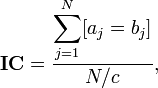
Would
solving the “Chinese Room” measure anything viable or valid?
Doubtful. A contention of mine is that no test developed by humans
could ever successfully determine consciousness by the simple fact
that we define it by our own beliefs.
Super
String theory has stated that 13 dimensions are believed to be
possible. Again our failing is humanity. Who are we to say that one
of those dimensions is not one where computers are conscious?
Philosophers like Dennet and Searle, and yes they are nothing more
than philosophers (not a bad thing though) are human, and hence
fallible. We can not be presumptuous enough to believe that our
theories, based on human experience, can define a universal thing
like consciousness. The best we can hope for is to define our
particular brand.
